

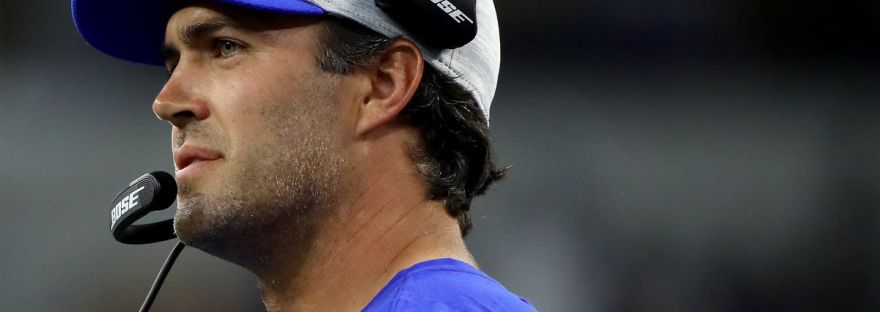
After snagging the coveted position as the Atlanta Falcons’ head honcho, Raheem Morris wasted no time kicking things into high gear. Armed with a killer strategy and an address book that would make anyone jealous, he’s been orchestrating a coaching staff tailored to his vision. These recent additions signal a notable shift from the coaching dynamics observed during Arthur Smith’s tenure. Each appointment is like adding a secret weapon to the Falcons’ coaching arsenal, and we’re here for the spicy details. As we peel back the layers of these fresh faces, fans get a sneak peek into the exciting new direction the team is heading. An in-depth analysis of the offensive coordinator, Zac Robinson, defensive coordinator, Jimmy Lake, and special teams coordinator, Marquise Williams, will provide insights into what fans can anticipate leading up to the draft and 2024 season. This is the internet non-insider’s guide to what’s cooking leading up to the draft and the 2024 season. Starting with Zac Robinson, and I’ll tag posts for Lake and Williams here once released. And for you dynasty fantasy fanatics, stay tuned – we’ve got more draft focused delights coming your way, serving up exactly what your football cravings desire.
Zac Robinson Background
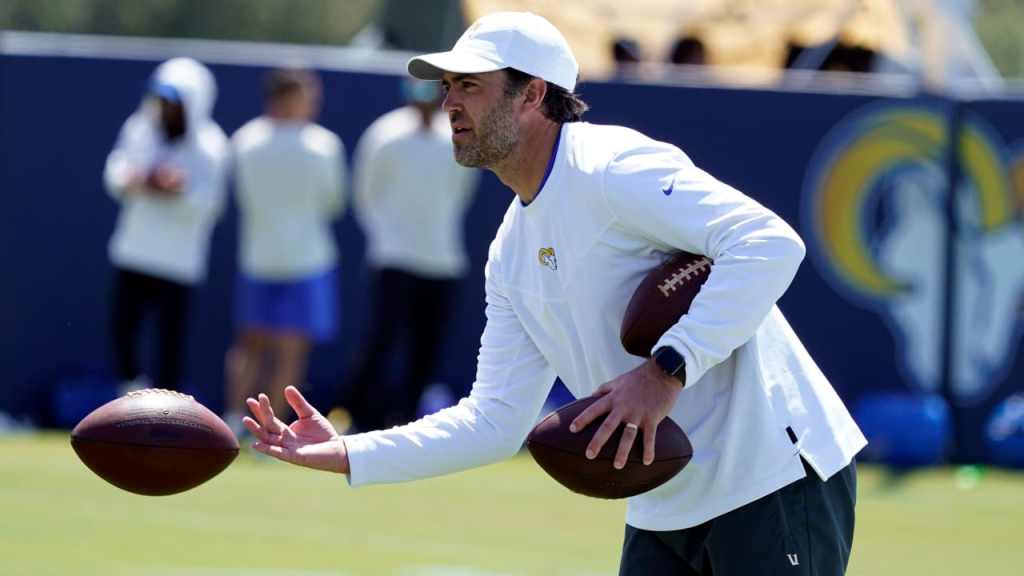
Raheem Morris wasted no time in securing Robinson as his offensive coordinator, a decision likely influenced by the profound impact Robinson has made under the mentorship of his coaching predecessors. In the ever-evolving landscape of coaching talent, Zac Robinson emerges as a surprising rising star, swiftly climbing the ranks of the NFL offensive coaching fraternity. He quickly went from a PFF grader to pass game coordinator for the Rams. He also spent time as an instructor at The Quarterback Ranch in Dallas. The details surrounding his coaching style are somewhat elusive, but there are clear connections. Drawing insights primarily from his stint as a NFL quarterback and his time coaching under influential mentors, we will try to give fans a look into what to expect next season under Robinson.
A former NFL quarterback with the Cincinnati Bengals during the Marvin Lewis era, Robinson’s football journey began with a five-year stint at Oklahoma State, where he quarterbacked under the dynamic offensive schemes orchestrated by head coach Mike Gundy. The Cowboys’ fast-paced RPO (Run-Pass Option) style, emphasizing defensive manipulation and exploiting mismatches, showcased Robinson’s prowess as a signal-caller, leading the team to multiple bowl appearances.
This is also where his coaching prowess begins to take roots. Says Robinson, “I can remember back in college with my roommate Matt Fodge, we would talk about opening a quarterback and kicking academy called QBK. I was always interested in that part of training, the one-on-one, because I went through it my senior year of high school with Rod Olson, who had coached at Oklahoma State in the early 1990s. He was in Colorado and was ahead of the time in quarterback training and individualized training that you see today.”
Robinson was drafted by New England and says he spent a lot of his early time with Bill O’Brian learning the game. Not only was he picking up offensive concepts, but more crucially he was learning about NFL defenses; how they attack offenses and disguise their pressures and coverages. As he puts it, “When I got drafted to New England, I spent a lot of hours with Bill O’Brien. He was the offensive coordinator and quarterbacks coach in New England at the time. One of the smartest guys I’ve ever been around. I spent a ton of time learning the offense but most importantly learning the defenses, how they were attacking offenses and what they do differently. I had never really seen that aspect of the game before.”
Robinson also credits Ken Zampese with teaching him the ins and outs of being a quarterback. Zampese may not be a household name, but he’s a respected QB coach who’s spent time coaching Kurt Warner, Carson Palmer, and Andy Dalton and understands the intricacies of the position.

After navigating the NFL landscape his rookie season, Robinson found himself in Cincinnati, coinciding with the drafting of quarterback Andy Dalton. Under the tutelage of then-offensive coordinator Jay Gruden and assistant Hue Jackson, Robinson’s exposure to the intricacies of the west coast offense began to take root. The connection with Gruden persisted as he remained associated with the team in various capacities for three years even though he was not on the active roster. Robinson also credits Hue Jackson for helping him develop in his early years. “The most I owe to learning from in the NFL is Ken Zampese.” The Bengals promoted him from quarterbacks coach to offensive coordinator before the 2016 season. “I spent the most time with him and Hue Jackson”, who was the team’s offensive coordinator. “They are knowledgeable guys, some of the smartest guys I’ve been around.”
Zac Robinson Coaching Entrance
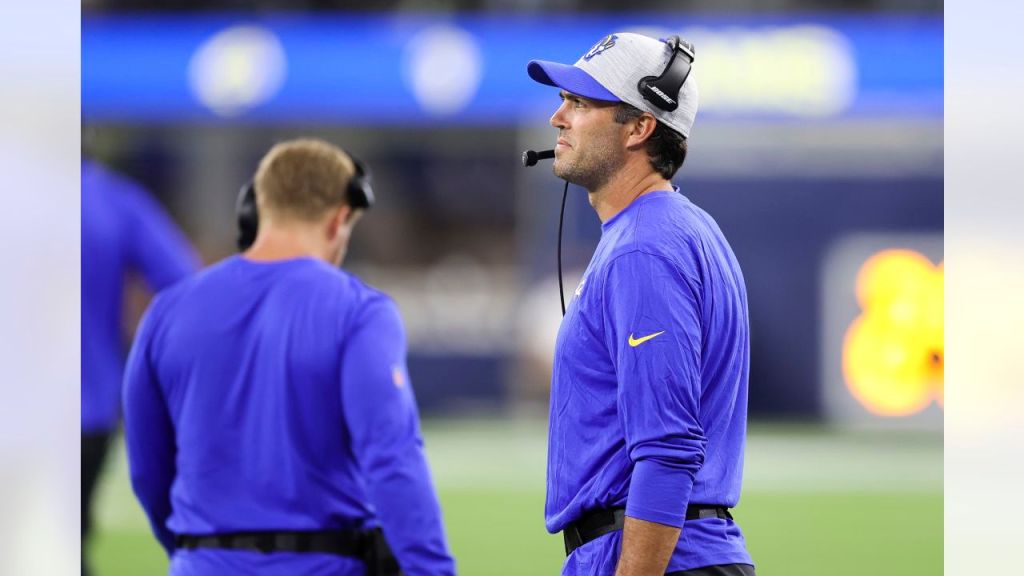
His transition to coach seems natural. He loved mentoring young players at the Quarterback Ranch in Dallas. He went to PFF as it was a natural fit. He explains it, “I always loved watching film. I never got tired of watching film. That’s the biggest part at PFF, you are in front of the screen and watching tons and tons of tape. That’s been a seamless, easy transition for me. It’s part of the game that I’ve enjoyed.” There’s a great article in the Oklahoman on his early years.
A potentially pivotal point in Robinson’s trajectory came during his tenure at Pro Football Focus, where he honed his analytical acumen before catching the attention of Sean McVay. The connection already exists as McVay was the offensive coordinator under Gruden in Washington. McVay’s pull into coaching marked the beginning of Robinson’s ascent within the Rams’ coaching ranks, progressing from assistant QB coach to WR coach and culminating in his appointment as pass game coordinator in 2023.
Robinson’s coaching journey has been a tapestry woven with influences from west coast figures like Jay Gruden, Sean McVay, and Mike Gundy, leaving an indelible mark on his approach to the game.
Zac Robinson Scheme
As the Falcons usher in a new era under Robinson’s offensive leadership, fans are left in anticipation of the stylistic transformation from Arthur Smith’s playbook. A departure from larger personnel packages is on the horizon, with an anticipated shift to an 11-style personnel featuring one tight end and one running back.
Drawing inspiration from his exposure to the west coast offense, particularly under Gruden and McVay, Robinson’s scheme is poised to emphasize pre-snap reads through strategic motions and post-snap adjustments based on defensive reactions. The onus will fall on the Falcons’ quarterback to decipher coverages swiftly and deliver precise passes within narrow windows. Derek Rackley breaks down a few plays below showcasing these concepts.
A move towards shorter dropbacks signifies a strategy geared towards rapid ball release to running back and tights ends forcing defenses up and establishing the deeper play-action opportunities. The run game is set to undergo a transformation, embracing a zone run scheme that aligns with Robinson’s skill set as a dynamic, one-cut, vision-oriented back with the speed to generate a deadly ground attack via both runs and quick passes.
The Falcons’ pursuit of speed on the outside, particularly in the wide receiver corps, will be critical to success as Robinson aims to open up play-action possibilities and keep defenses guessing. Drake London, with his penchant for securing deep balls in one-on-one situations, is poised for success in the reinvigorated offensive system. London can expect more targets without the loss of big play potential as they look to creatively involve him in multiple route concepts.
Looking ahead, the Falcons’ offseason priorities crystallize around three focal points: the pivotal selection of a quarterback to anchor the offense, the addition of speedy wide receivers to facilitate three-WR sets, and addressing concerns within the interior offensive line, notably the center position. As Robinson takes the reins, his imprint on the team’s playing style and strategic vision is poised to redefine the Falcons’ offensive identity. If he’s to be successful, Robinson and Falcons brass must identify and coach the QB who can make his vision a success.
Get ready for a West Coast passing attack, 11 personnel, and zone runs! The Falcons under Robinson will aim to outsmart defenses with quick passes and dynamic zone concepts, utilizing pre-snap motions and reads to find advantageous matchups. As they advance the ball, the focus shifts to deep-field opportunities, strategically set up by the quick passing game and dynamic run concepts forcing defenses closer to the line of scrimmage. While the roster aligns well, the spotlight is on the quarterback dilemma. Excitement brews, but the quarterback question looms large – it is THE crucial puzzle piece for success. Robinson’s OC reign hinges on this off-season’s pivotal decision at QB. Nail it, and he’s on the fast track to a head coaching role. Miss, and it’s an uphill battle for both Robinson and Morris.


 The Other Side of Sports